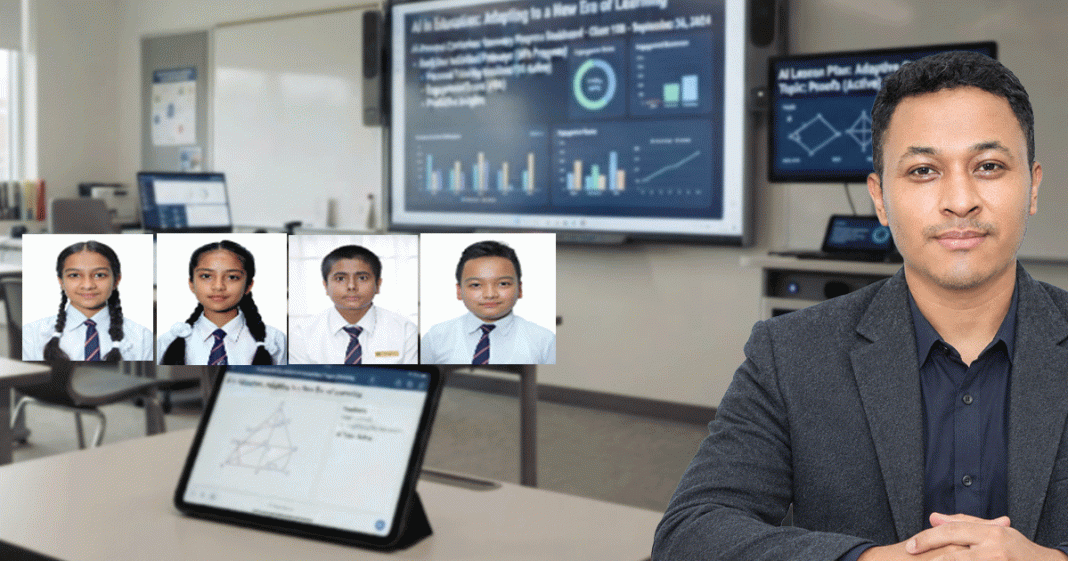
Artificial intelligence is no longer a futuristic concept in classrooms — it is quickly becoming part of everyday learning. From personalized tutoring apps to automated grading systems, schools and universities are beginning to integrate AI tools in ways that are reshaping how students learn and how teachers teach.
A Shift in the Classroom
Over the past two years, educators have started using AI-powered platforms to identify learning gaps in real time. Instead of waiting for end-of-term exams to reveal where a student is struggling, adaptive learning software can flag weak areas within days, allowing teachers to intervene early.
“AI doesn’t replace the teacher — it gives the teacher better information,” said one high school instructor who has piloted an AI-based math tutor in her classroom this year.
Benefits Students Are Noticing
Many students report that AI tools help them study more efficiently. Chatbot-style assistants can explain difficult concepts in multiple ways until something clicks, and practice-question generators let learners drill weak topics without waiting for a teacher to prepare extra material.
Group projects have also changed. Students now use AI to brainstorm ideas, organize research, and even check their writing for clarity though most schools still require that final work reflect the student’s own understanding and voice.
Concerns Remain
Not everyone is convinced the shift is entirely positive. Teachers and parents have raised concerns about overreliance on AI, particularly the risk that students might use these tools to complete assignments without genuinely learning the material. Academic integrity policies are being rewritten in many institutions to address AI-assisted work, and some schools have reintroduced in-class, handwritten assessments to ensure students can demonstrate understanding without assistance.
There are also broader questions about equity. Not every student has equal access to devices or reliable internet, and critics warn that AI in education could widen the gap between well-resourced and under-resourced schools unless access is addressed deliberately.
Student Perspectives
Bigya Pant: “AI has made studying feel less overwhelming. When I don’t understand something in class, I can ask an AI tool to explain it a different way instead of feeling stuck.”
Shreesha Bhandari: “It’s helpful, but I think we need to be careful. If we let AI do all the thinking for us, we won’t actually learn the skills we’re supposed to be building.”
Aabhash Gautam: “What I like most is how AI helps level the playing field. Students who can’t afford private tutoring can still get extra help whenever they need it.”
Aswin Thapa Magar : “AI makes it easier to explore subjects I’m curious about outside of class. I just think we should always double-check what it tells us instead of trusting it blindly.”
Looking Ahead
Despite the challenges, most educators agree that AI is here to stay in the classroom. The focus now, they say, is on building clear guidelines for responsible use — teaching students not just how to use AI tools, but when and why to use them, and how to think critically about the answers they receive.
As one school administrator put it: “The goal isn’t to teach students to depend on AI. It’s to teach them to work alongside it wisely.”
Reported by Umesh Balami (M.Phil in ICT), with students Bigya Pant, Shreesha Bhandari, Aabhash Gautam, and Aswin Thapa Magar.(Bagmati Boarding Secondary School, Sukedhara-04, Kathmandu).