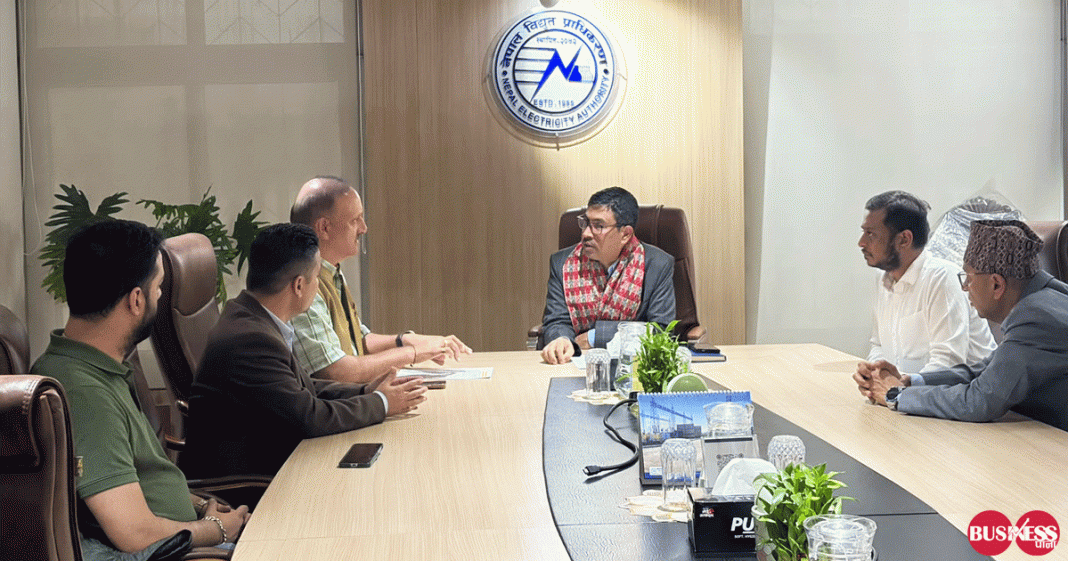

The Solar Power Producers’ Association, Nepal (SOPPAN) has petitioned the Managing Director of the Nepal Electricity Authority (NEA) to allow Battery Energy Storage Systems (BESS) at solar power plants already in operation. The petition, dated November 5, 2026, was copied to the Hon. Minister for Energy, Water Resources and Irrigation, the Electricity Regulatory Commission (ERC), the Ministry of Energy, Water Resources and Irrigation (MoEWRI) and the Department of Electricity Development (DoED).
Climate-induced floods, which worsened in 2026, have damaged or destroyed approximately 1,000 MW of hydropower capacity. Nearly 3,500 MW of the system’s 4,300 MW is run-of-river, and imports from India are expected mainly in India’s off-peak hours. The evening peak is where the shortfall will be most acute.
SOPPAN proposes that each operating solar plant of 5 MW and above install BESS of at least 10 percent of its installed solar capacity, with two to three hours of storage. The BESS would be used for peak shaving only, not for grid stability or other ancillary services, to meet the evening peak in the dry season and in summer.
Developers would finance the BESS in full, at no capital cost to NEA, using existing land, substations and transmission lines that stand idle after sunset. Installation takes four to six months. The 80 MW of solar plants of 5 MW and above now in operation would add at least 8 MW of peaking capacity. As the batteries would earn nothing from ancillary services, SOPPAN stressed that the peaking tariff must be commercially viable on its own, and urged the ERC to determine it at the earliest.
“Nepal has lost close to a quarter of its installed hydropower capacity, and the evening peak cannot wait for new plants. Our members can add firm peaking power within months, at their own cost. What we need is a quick decision and a viable tariff,” said Dr. Sandip Shah, President of SOPPAN.
SOPPAN has asked NEA, the ERC, DoED and MoEWRI to act within weeks. If the framework is finalized by mid-December 2026, the first plants could deliver peak power by April 2027.